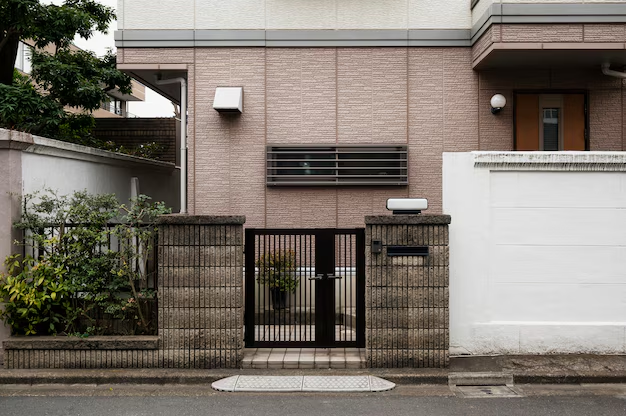
Many people choose a metal fence for one simple reason: “I put it up and forgot about it.” Unlike wood, it doesn’t need sanding and painting every spring. Unlike a living hedge, it doesn’t need trimming.
But the phrase “requires minimal maintenance” does not mean “requires no maintenance at all.” Your fence stands outdoors 24/7—sun, rain, dust, and birds. Without a little care, even the highest-quality metal can lose its shine.
Here’s how to keep your fence looking new for decades with just one hour per year.
Water Care – The Basis of Cleanliness
The main enemy of the coating isn’t water—it’s dirt that accumulates on the surface. Dust, road salts, and industrial emissions stick to the slats. This layer acts like a sponge, holding moisture and aggressive substances that slowly damage the paint layer.
Cleaning schedule: at least 1–2 times per year—best in spring (to wash off winter salts) and autumn.
How to clean: a simple garden hose with water. For heavy dirt, use a soft sponge and soapy water (dish soap or car shampoo).
What not to do: avoid high-pressure washers (like Karcher) from too close—powerful jets can damage joints or seals.
Protect the Polymer Coating
Modern fences have a factory-applied powder coating—a polymer layer baked in an oven. It’s very durable but has its weaknesses.
No solvents: never rub the fence with acetone, white spirit, or gasoline. These can dissolve the gloss and leave matte stains.
No metal brushes: don’t try to scrape dried mud with a knife or the rough side of a sponge. This will scratch the protective layer and compromise corrosion resistance.
Inspect for Damage
Once a year, carefully walk the perimeter. Look for deep scratches or chips down to the metal—these can occur from stones thrown by lawnmowers or carelessly parked bicycles.
If the protective layer is damaged, the metal starts to oxidize. A small scratch today can become a rust spot in a year. Solution: keep a small touch-up paint bottle in your fence color and carefully retouch the damaged areas to restore the seal.
Mechanisms Appreciate Care
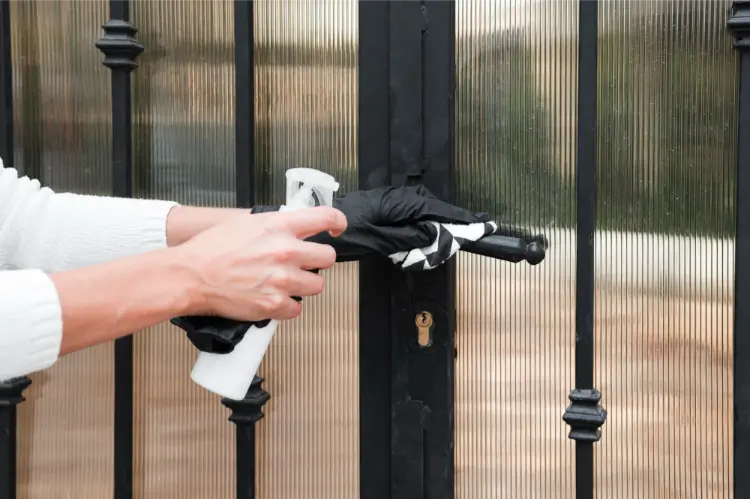
Full maintenance includes moving parts. Gates and pedestrian doors endure heavy use.
Hinges: lubricate with silicone spray or WD-40 every six months to avoid squeaks and premature wear.
Locks: in winter, mechanisms can freeze. Don’t pour boiling water. Use special de-icers. Never break ice with a lever or shovel—this will damage the coating.
Cleanliness as an Investment in Your Property
Buying a quality metal fence often creates the illusion that it can be completely forgotten. This is a dangerous misconception. Even the most advanced materials—aluminum and galvanized steel with powder coating—need basic care to withstand the harsh outdoor environment.
Think of maintenance not as a chore, but as the most cost-effective insurance for your property. With 30 minutes of spring cleaning with a hose, you wash away aggressive salts and residues that have been corroding the protective layer for months.
The math is simple: regular inspections and an inexpensive touch-up paint can extend the fence’s life by 10–15 years. This is one of those rare cases where minimal effort delivers maximum economic benefit—keeping your home’s premium appearance intact without expensive repairs.
Do you love order in everything?
Caring for a home is made up of thousands of small details. We help you systematize them. Our blog publishes seasonal checklists and maintenance tips for houses and properties.
Subscribe to receive useful reminders and expert instructions.