For a long time, concrete was considered a “rough” material—used only for foundations and carefully hidden under plaster, tiles, or paint. Exposed raw concrete was seen as a sign of unfinished work.
Modern architecture, however, has overturned these rules. After the rise of loft-style interiors, the trend of “honest materials” has spread to landscape design. Today, architectural concrete is a mark of premium taste.
When combined with metal, it creates an incredibly stylish and strict aesthetic. Let’s explore why this trend has conquered Europe and how to apply it to your property.
The Philosophy of Contrast
The secret to the “wow” effect lies in the play of opposites—our eyes love contrasting textures.
-
Concrete: rough, heavy, monumental, with natural pores and uneven tones—it embodies the raw strength of stone.
-
Metal: smooth, light, perfectly geometric, and uniform in color—it represents technology and order.
When these two materials meet in a combined fence, they amplify each other. The metal appears even more elegant against the brutal backdrop of concrete.
It’s Not Just Cement
It’s important to understand that we’re not talking about pouring a crooked form with cheap mortar. Architectural concrete is a special mix with additives.
Once hardened, the surface can be perfectly smooth (glass-like) or textured, but without defects. Designers often leave “caverns” (air bubbles) to emphasize naturalness. Such concrete is not painted—the natural light gray or graphite tones are part of the modern design.
Design Scenarios: How to Combine
Several proven formulas create a stylish perimeter:
-
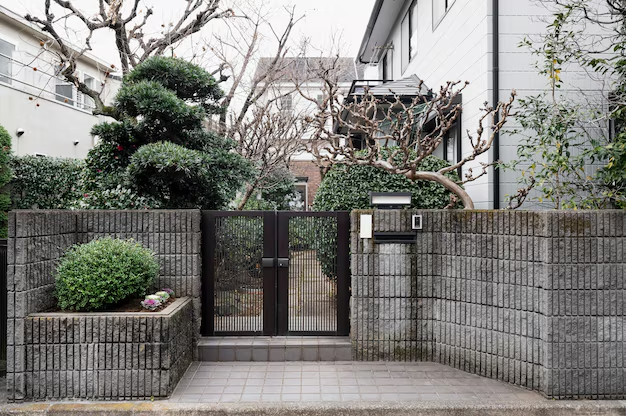
Column Rhythm: Wide concrete columns are installed, and the space between is filled with lightweight metal slats (e.g., louvers). Concrete conveys a sense of fortress-like reliability, while metal adds airiness.
-
Monolithic Plinth: The lower part of the fence (up to 1 m) is cast in concrete, protecting against mud and street dust. The upper part is metal.
-
Asymmetry: High-level industrial style. Concrete blocks of varying widths alternate with metal inserts in a seemingly chaotic yet carefully planned sequence.
Color Palette: Strict Aesthetics
A key rule for these fences: no bright colors. The magic is in subtle monochrome shades.
-
Classic: light gray concrete with dark metal. Concrete is the neutral “canvas,” metal is the graphic contour—usually anthracite (RAL 7016) or deep black (RAL 9005).
-
Bold alternative: Corten steel. This metal has a special “rusted” velvet effect. The orange-rust tone against cool gray concrete creates a warm, living contrast that looks premium and ultra-modern.
In both cases, the neutral concrete highlights landscaping—greenery appears especially lush against the gray backdrop. Concrete does not compete for attention; it frames nature beautifully.
Practicality: A Fortress for Centuries
Beyond aesthetics, this combination is incredibly practical. Concrete is one of the most durable materials on Earth, gaining strength over time. Powder-coated metal doesn’t rust.
This fence fears neither snowplows, moisture, nor sun—it requires no plastering or painting.
An Investment in Timeless Style
Architectural concrete and metal is not just a loft-style trend—it’s a return to honest architecture. There’s no imitation: concrete looks like natural stone, metal showcases technology and protection.
Such a fence sends a clear message: the homeowner values privacy, reliability, and contemporary taste. It’s for those who embrace strict lines and are ready to leave outdated décor for monumental design.
Longevity and Value
-
Durability: Unlike painted fences where paint flakes off after five years, or wood that rots, the concrete-metal combination is almost eternal.
-
Resale Value: Over time, concrete gains strength, and quality metal keeps its appearance. The fence does not age visually and increases the property’s market value.
Choosing this combination means building not just a boundary, but a full-fledged architectural object that commands respect even 20 years from now.
Looking for modern house ideas?
Architectural trends change, but style remains. Subscribe to our blog to learn how to turn your property into a piece of contemporary art.