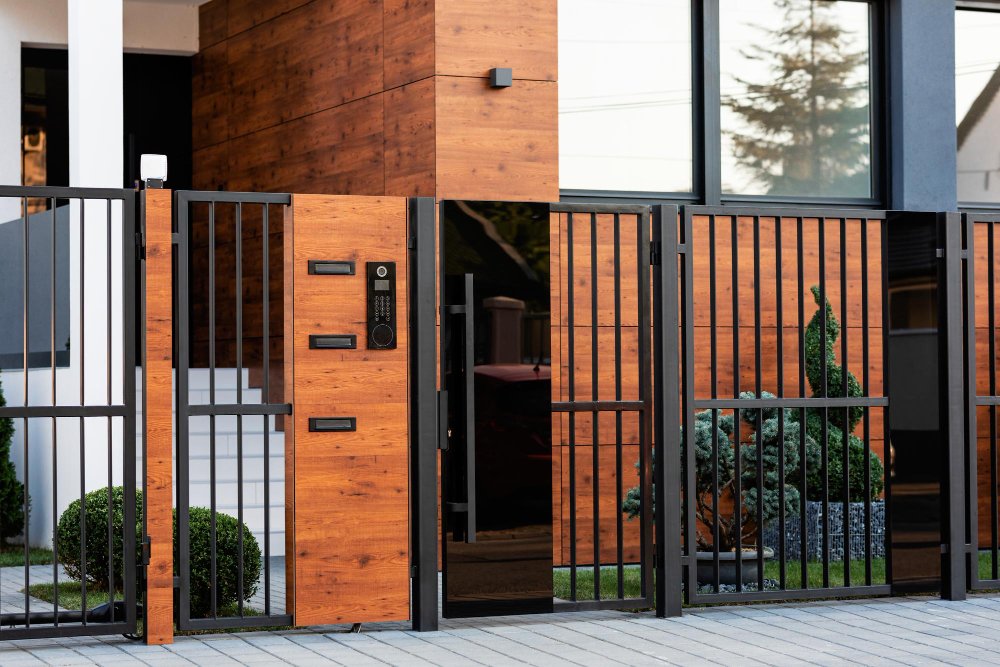
You visit a company showroom and look at fence samples — they all appear perfect: smooth, glossy, and beautiful. One manufacturer offers a 2-year warranty, another promises 20 years. Visually, they look identical.
So the natural question arises: why pay more? Is it just marketing, or is there a real technological difference?
The answer lies not in what you see, but in what is hidden beneath the paint layer. Let’s take a closer look at what determines the real durability of a coating — and why cheap paint can turn out to be very expensive.
Secret #1: Preparation Is More Important Than Painting
The main reason paint begins to peel off after a year is poor metal preparation.
Even the most expensive paint applied directly to poorly prepared metal will not last long. Micro-corrosion will start underneath, and rust will gradually lift the coating from the inside.
Factories that provide long-term warranties use multi-stage chemical preparation, including:
-
Pickling (removal of oxides and impurities)
-
Passivation (creation of a protective conversion layer)
-
Primer application
This invisible chemical layer ensures that the paint adheres to the metal at a molecular level. Achieving this quality in a small workshop or garage environment is practically impossible.
What Is Qualicoat?
If you are looking for truly high-quality coating, look for the Qualicoat certification in the manufacturer’s documentation.
This is not a paint brand. It is an international Swiss quality standard for coating aluminum and metal products.
Factories licensed under this standard must undergo regular inspections and testing. Sample panels are subjected to extreme conditions:
-
boiling water tests
-
impact tests with a hammer
-
scratch resistance checks
-
and most importantly, 1,000 hours in a salt spray chamber
If the coating survives these tests, it will easily withstand 20 years of rain, sun, and environmental exposure. For customers, the presence of this certificate is one of the best indicators of reliability.
Color Durability: Class 1 vs Class 2
Warranty coverage is not only about rust protection. A fence may remain structurally intact but lose its color and gloss over time.
This depends on the type of powder coating used.
Class 1 (Standard)
The most common option. It provides good protection, but pigments gradually fade under sunlight. Color warranties are typically 5–10 years.
Class 2 (Super Durable)
Premium coatings with enhanced UV resistance. They maintain their color and gloss much longer, with warranties often reaching 20–25 years.
Read the Fine Print
When a manufacturer promises a “lifetime warranty,” always read the contract carefully. Important limitations are often hidden in the details.
What exactly is covered?
Some warranties guarantee only that the metal will not develop through corrosion (holes) but do not cover paint peeling or fading. This is a common trick.
Geographic limitations
If your home is located near the sea (within 1–3 km of the coast), standard warranties may not apply due to the aggressive salt content in the air. Coastal environments require special “Seaside” coating systems with enhanced surface preparation.
A Mistake That Cannot Be Fixed
Why is it so important to choose a quality coating from the start?
Because repainting a modern fence properly at home is practically impossible.
Powder coating is cured in industrial ovens at about 200 °C. If a cheap coating begins to peel after three years, you cannot restore it with a brush or spray paint. The result will look amateurish and will last only until the first rain.
In most cases, the only solution is to:
-
dismantle the fence
-
sandblast the old coating
-
repaint it in a specialized workshop
This process can easily cost more than installing a new fence.
The Real Price Difference
The difference between a 5-year and a 20-year coating warranty is usually only 10–15% in price.
That extra cost pays for factory technologies — such as certified preparation processes and controlled powder coating systems — that eliminate problems for decades.
Want to Understand Quality Like an Expert?
Manufacturers often use complex technical terms that confuse customers. Our goal is to translate those terms into clear, practical knowledge.
Subscribe to our blog to learn how to:
-
distinguish premium products from cheap imitations,
-
understand modern materials and technologies,
-
and make smart long-term investments in your home.