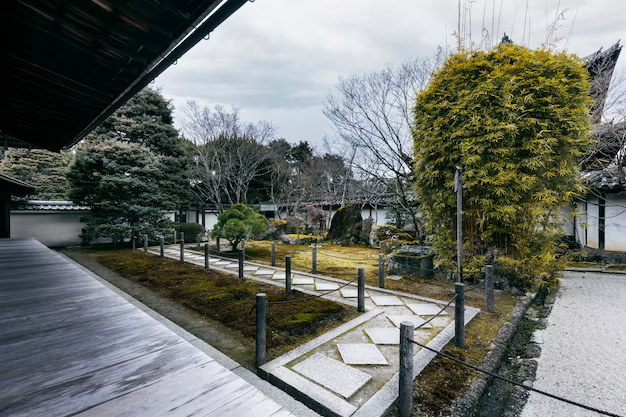
Owners of large plots often face the problem of a “bare field.” It seems there’s plenty of space, but no coziness. The wind blows through the yard, the ball from the playground flies into the garden, and the barbecue area isn’t separated from the parking lot at all.
The secret to a cozy yard is proper spatial division. This is called yard zoning. You don’t need to build high walls inside the plot. It’s enough to use light visual boundaries.
Main rules: don’t block the view
Zoning should be functional but not cumbersome. The goal is to create “rooms under the open sky” while keeping the sense of spaciousness.
Low fences are perfect for this. These are structures 40–80 cm high. They clearly mark the boundaries of an area, but allow the eye to pass over them easily.
Low metal fences: style and function
Mini-fences aren’t just the classic wooden picket fence. Modern garden fences made of metal look stylish and can last for decades.
How to use them:
-
Protecting plants. Separate flower beds or lawns from paths. This will protect your plants from lawn mowers, pets, or active children’s games.
-
Unified style. If your outer fence has horizontal slats (louvers), you can order matching mini-sections for internal zoning. This creates a cohesive architectural ensemble.
Such decorative fences require no maintenance if made from quality metal with a polymer coating.
Gabions: stone and metal
One of the main trends in European landscape design is gabions.
What are they? Gabions are sturdy metal mesh structures filled with stones.
Why they’re great:
-
Eco-style. Natural stone and metal fit perfectly with garden greenery.
-
Versatility. A gabion can be more than a wall. Place a wooden board on top for a stylish bench, or make it taller for a barbecue table or as a retaining wall for a terrace.
-
Noise absorption. The mass of stones effectively dampens sounds, creating a quiet corner for relaxation.
Materials overview: what else is available?
In addition to metal and stone, there are many options for creating boundaries. Here are the pros and cons:
-
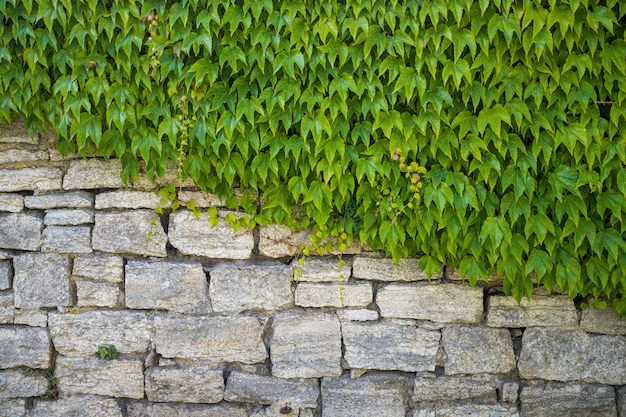
Living walls and trellises (metal + plants)
-
Trendy in eco-design. Attach a light metal mesh or trellis and grow climbing plants (ivy, roses, vine).
-
Pros: Beautiful and beneficial for microclimate.
-
Cons: Plants need time to grow and require care (watering, pruning).
-
-
Wood and WPC (Wood-Polymer Composite)
-
Classic wooden picket fences create a cozy rustic style.
-
Pros: Natural appearance, pleasant to touch.
-
Cons: Wood rots and needs annual painting.
-
Tip: If you like the wood look, choose WPC. It looks like wood but resists moisture better.
-
-
Plastic
-
The most budget-friendly option, often sold as ready-made sections in hardware stores.
-
Pros: Low cost, easy installation (simply stake into the ground).
-
Cons: Fades quickly in the sun, becomes brittle in cold, looks cheap. Suitable as a temporary solution.
-
How not to turn your yard into a maze
A common beginner mistake is too many partitions. You don’t need to fence every bush.
Designer advice – combine materials:
-
Use gabions where a strong support is needed (e.g., terrace retaining wall).
-
Use low metal fences where a clear lawn line is needed.
-
Use living plants where shade and coolness are desired.
The balance of these elements creates the ideal design.
Summary: the secret to a harmonious plot
Zoning transforms a chaotic collection of buildings and beds into a unified, comfortable living space. This is the scenario your family will move through every day.
What to choose to implement this scenario?
-
Plastic is a “one-season” solution. Attractive in price, but quickly loses appearance, fades, and pollutes the environment. Suitable for a temporary villa, not a permanent home.
-
Wood is beautiful and warm, but requires constant painting and care. Without it, wood quickly turns gray and rots, spoiling the overall garden look.
-
Metal and gabions are the choice of pragmatists and aesthetes. Yes, slightly more expensive upfront, but an investment for decades of peace of mind. Low metal fences and natural stone create a solid “skeleton” for your design, resistant to rain, sun, and time.
Our advice – seek balance. Use metal and gabions to create clear, lasting boundaries, and living plants to fill in space and provide shade. The combination of durable modern materials with the softness of greenery gives the “finished” look many people dream of for their plot.
Need help with planning?
Not sure how to integrate gabions into your landscape or which mini-fences to choose?
Describe your task, and we’ll advise you on how to make your yard comfortable and modern without unnecessary costs.