Imagine this: late at night, silence… and suddenly a loud metallic screech followed by a dull thud. Your neighbor has returned home and opened their gate.
For years, we considered this normal. A gate is a heavy metal structure, so it’s supposed to squeak, clank, and make noise. But technology has changed. Modern engineering has declared war on noise.
Today, silent gate operation is no longer a pleasant bonus—it’s a standard requirement for a quality home. Let’s see which innovations make it possible.
The Main Problem: Metal Against Metal
The main source of noise in old gates is friction. An iron wheel rolls along an iron track. An iron hinge rubs against a steel pin.
Any unevenness, a grain of sand, or lack of lubrication turns the gate into a musical instrument. Metal conducts vibrations extremely well, amplifying sound several times. Engineers realized that to achieve silence, the materials had to change.
Revolution in Sliding Gates: Polymers
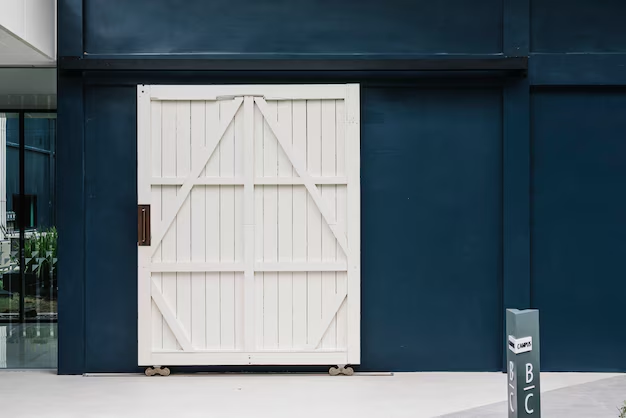
The noisiest gates are sliding gates. Their large wings move on rollers, creating a rumble like a train.
Previously, sliding gate rollers were made of steel—strong but extremely noisy. The innovation came from chemistry: manufacturers began using glass-filled polyamide.
This composite material matches metal in strength but behaves completely differently:
Vibration damping – the polymer absorbs micro-shocks and noise. The gate moves smoothly, like a car with good tires.
Corrosion resistance – the polymer never rusts, and the roller surface remains smooth.
With such gate hardware, noise levels drop by 80% compared to steel rollers.
Swing Gates: Bearings Instead of Pins
For swing gates, the problem is squeaking. It occurs when a traditional hinge rusts or the wing slightly sags under its own weight.
Modern, high-quality mechanisms solve this with bearings. The hinge is no longer just two tubes inside each other—it contains a full ball bearing.
Result: a 200-kg gate can be pushed with one finger. Minimal friction means minimal noise. Even after 10 years, the gate opens as smoothly as on day one.
Automation: Soft Start Technology
Hardware is important, but the “brain” of the gate is its motor. Old motors worked roughly: they jerked the gate at startup and slammed it into the catch at closing, audible across the street.
Modern drives feature Soft Start / Soft Stop. Smart electronics slow the gate at the end of the cycle. The gate approaches closure gently—no thud, no clanking.
Silence – A Sign of Refinement
Comfort in a private home lies in the details. Silent mechanisms are not only for your convenience but also a sign of respect for others.
A quiet gate won’t wake your child sleeping in the yard. It won’t make your neighbor jump if you return at 2 a.m. This is a new level of domestic culture that is quickly becoming standard.
Summary: Investing in Peace of Mind
When ordering a gate, people often focus only on the design of the wing and try to save on “invisible” details. That’s a mistake.
Hardware is the heart of a gate. Rollers and hinges determine how the system functions. The price difference between ordinary and innovative silent systems is negligible in the scope of the entire budget—but the difference in experience is enormous.
By choosing modern polymer systems and quality hinges, you’re buying silence. And in today’s world, silence is the most valuable resource, directly affecting your health and mood.
Interested in comfort-enhancing technologies?
The world of construction materials is evolving rapidly. We track new solutions in the European market to bring you the latest first.
Subscribe to our blog to keep your home modern and cozy.