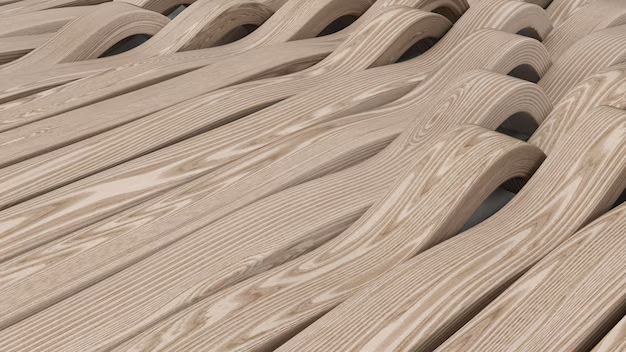
Wood is the coziest and warmest material. A fence made of natural wood fits beautifully into any landscape. But there’s a major drawback—it’s not durable. Rain, sun, and insects can destroy the wood in just a few years, forcing the owner to constantly sand and repaint the fence.
Many people dream: “If only there were a material as strong as steel but as beautiful as oak.” Such a solution exists.
This is not plastic, and it’s not cheap foil. It’s sublimation technology—it allows you to choose metal instead of wood while preserving the natural aesthetics without the disadvantages of real wood.
What is sublimation? The physics behind it
In physics terms, sublimation is the transition of a substance directly from a solid to a gas without going through a liquid phase. But how does this work for a fence?
In industry, sublimation is a method to embed a design into the coating at a molecular level. To understand the difference—imagine a sticker versus a tattoo:
Lamination (foil) – like a sticker on the skin. It sits on top. Over time, the edges may peel off, and the sticker itself can scratch or detach.
Sublimation – like a tattoo. The pigment doesn’t sit on the metal surface. Under heat, it turns into hot gas and fuses deep into the powder coating layer.
As a result, the paint and the design fuse into a single monolithic layer—you cannot “scratch off” the wood texture without damaging the metal itself. That’s why sublimated coatings resist scratches, do not peel, and last as long as the metal itself.
How the magic is created: 4 steps
The production process looks like science fiction:
Base – first, the aluminum or steel profile is coated with special powder paint (usually beige or brown). This is the “canvas.”
Foil – then the profile is tightly wrapped with special foil printed with a wood grain pattern (knots, fibers).
Vacuum – air is sucked out from under the foil. It is pressed against the metal with great force, following every curve of the profile.
Oven – the piece is placed in a thermal chamber at about 200 °C. Here the magic happens—the paint on the foil turns into gas and fuses into the powder coating on the metal.
Once the profile cools, the foil is removed. The pattern is now part of the coating.
Spot the 10 differences
The quality of modern wood imitation is so high that from a meter away, it’s impossible to tell it’s metal.
The technology reproduces even the smallest details:
Annual rings
Color transitions
Knot patterns
The most popular finishes in Bulgaria are light golden oak and rich dark walnut—perfectly matching tiled roofs and stone masonry, creating a classic “rustic coziness.”
Why it’s better than lamination
Metal lamination is a cheaper alternative. In lamination, a colored PVC foil is simply glued onto the metal.
Drawbacks of lamination:
The foil can scratch.
In heat, the adhesive dries out and the foil may peel at the edges (especially on the south-facing side).
Advantages of sublimation:
Peeling is physically impossible (no glue, no layers).
The coating withstands impacts and scratches like regular powder paint.
Natural warmth, metal durability
Sublimation technology is the perfect compromise for a practical owner.
You get a fence that looks “alive” and warm, pleasing the eye with natural texture. And at the same time:
It is fire-resistant.
It is not eaten by wood-boring beetles.
It does not rot from moisture or crack under the sun.
It never needs repainting.
This is an investment in your free time—you enjoy the beauty of wood without being its “servant,” maintaining it every year.
Interested in modern materials?
Construction technologies have advanced tremendously. We explain how to use innovations to make your home beautiful and low-maintenance.
Subscribe to our blog to learn about solutions that save your time and money.