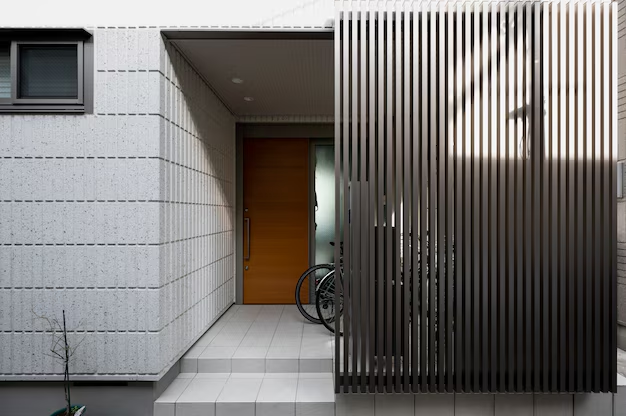
The fence is the largest visual element on your property. Its surface area is often greater than the facade of the house itself.
That’s why the geometry of the fence is critically important. Choosing the wrong lines can visually “flatten” the house or turn a cozy yard into a deep pit. Conversely, the right rhythm of slats can correct the shortcomings of the landscape.
What to choose: horizontal or vertical? Let’s look at it from a design perspective.
Horizontal lines: the effect of widening
Horizontal lines are a key trend in modern architecture, including popular louver-style fences and ranch-style fences.
How does it work? It creates an optical illusion. The human eye glides along the lines. Long horizontal stripes visually “stretch” the space in width.
When this is ideal:
Narrow facade: If your plot is narrow but long, horizontal fences will make it look wider and more spacious.
Flat terrain: On a level plot, horizontal lines emphasize the scale of the territory.
Privacy: Wide horizontal slats create the impression of a solid, reliable wall, even if there are gaps between them.
Vertical lines: the effect of height
Vertical lines are classic. This includes the familiar metal picket fence or modern rectangular profiles.
How does it work? Vertical lines guide the eye upward. This creates the illusion of height.
When vertical lines are worth choosing:
Low house: For a single-story “low” house, vertical profiles visually “lift” the architectural ensemble.
Sloped plot: Horizontal fences may step awkwardly on slopes, while vertical pickets can follow the terrain smoothly, maintaining harmony.
Lightness: Vertical gaps make the fence appear more transparent and airy than massive horizontal panels.
Style battle: modern vs. classic
The design of your yard should match the style of the house:
Horizontal lines (Ranch, Louvers): Suited for Hi-tech, Minimalist, Loft, or Wright-style houses. Emphasizes modernity and dynamism.
Vertical lines (Picket fences): Suited for Classic, Provence, Country, or English styles. Adds elegance, order, and traditional coziness.
Not just geometry: color matters too
Remember that the effect of lines is amplified by color:
Dark colors (Anthracite, Black): Make property boundaries clear and graphic. The fence appears closer.
Light colors (White, Gray, Metallic): Add airiness. The fence “blends” into space, making the plot appear larger.
Summary: formula for the ideal choice
When making a final decision, consider three factors:
Terrain:
Flat land = Horizontal (ranch-style fence)
Steep slope = Vertical (metal pickets)
Plot size:
To visually widen the property = Horizontal lines
To visually raise the “ceiling” = Vertical lines
Material:
Regardless of geometry, choose metal, not wood. Long wooden boards (especially horizontal) sag over time, while metal profiles maintain perfect geometry for decades without tensioning or repainting.
Remember, the fence is the “frame” of your property’s picture. Properly chosen slat geometry can hide landscape flaws and unify the entire architectural ensemble. Always balance the technical features of your terrain with the style of your house.
Want to see how it will look?
It can be hard to imagine the result in your mind. Send a photo of your plot, and we can advise which type of profile—horizontal or vertical—will best highlight the beauty of your home.