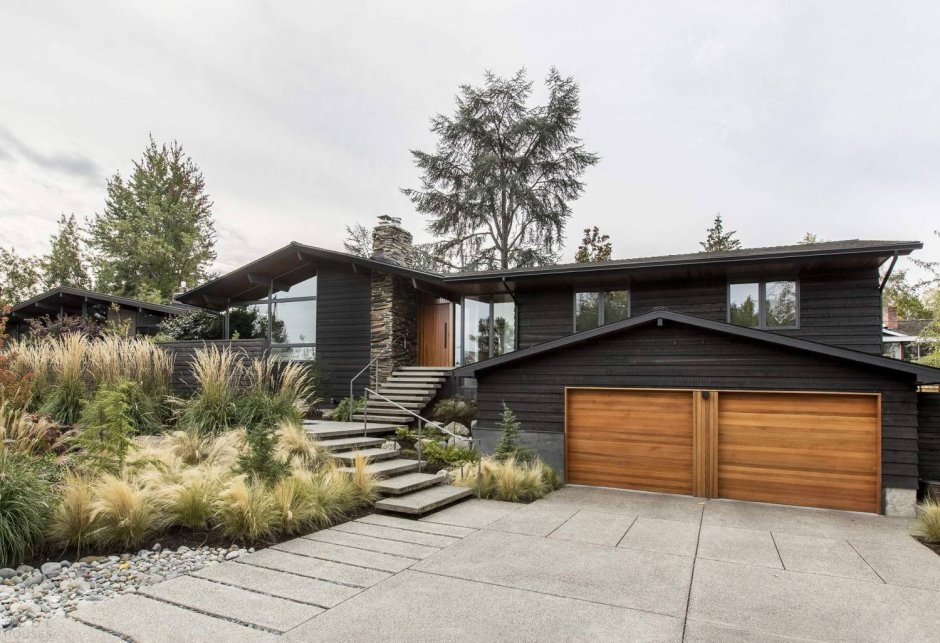
Retaining walls are one of the most common needs on sloped properties. A retaining wall holds back soil from slipping, levels out terraces, and protects a building’s foundations from erosion. It can also become a decorative element — terraced garden beds, natural stone feature walls, or contemporary gabion structures.
The question of whether to build a concrete retaining wall or use gabions has no single answer. The choice depends on three parameters: the height of the slope, the structural load, and the desired aesthetic.
When a Retaining Wall Is Necessary
- The level difference between adjacent zones exceeds 40–60 cm — without a retaining wall, soil will migrate.
- The plot sits on a slope of more than 15–20° — without stabilisation, the upper area gradually shrinks.
- Clay or sandy soil prone to movement after heavy rainfall.
- A building stands close to the slope — protecting its foundations from undermining is a priority.
- Flat terraces are planned for a vegetable garden, lawn, or patio.
Types of Retaining Walls: Full Comparison
| Type | Material | Max height (no engineering required) | Installation | Drainage | Cost |
|---|---|---|---|---|---|
| Monolithic concrete | Reinforced concrete | Up to 1.5 m | Complex | Essential | High |
| Precast block system | Concrete retaining wall blocks | Up to 1.0–1.5 m | Medium | Essential | Medium |
| Brick wall | Brick + mortar | Up to 1.0–1.5 m | Medium | Essential | Medium |
| Gabions | Steel mesh + stone fill | Up to 3–4 m | Simple | Self-draining | Low–Medium |
| Timber crib wall | Treated timber | Up to 0.8–1.0 m | Simple | Advisable | Low |
| Natural stone | Rubble or dressed stone | Up to 1.5–2.0 m | Complex | Essential | High |
How to Build a Retaining Wall: Key Stages
- Load calculation — slope height, soil type, and proximity of buildings determine the required structural strength.
- Drainage — the most critical and most frequently omitted stage. Without drainage, water pressure destroys even reinforced concrete over several winters.
- Foundation — for walls above 0.8–1.0 m, the base must sit below the local frost depth.
- Backward lean — the wall tilts slightly toward the slope (1–3°), which improves resistance to lateral pressure.
- Staged backfill — soil is placed in layers of 20–30 cm with compaction.
💬 Not sure which retaining wall construction suits your slope and soil conditions? Free consultation https://miradex.info/konsultacziya/
Gabions: Advantages and Real-World Limitations
The principal advantage of gabions is that they are permeable — water passes through freely, automatically resolving the drainage problem. Gabions also have a natural visual quality that integrates well with landscaping.
- Advantages: self-draining, natural aesthetic, flexible form, long service life with quality mesh.
- Limitations at greater heights: walls above 2.5–3.0 m require geogrid reinforcing layers.
- Mesh quality: low-cost galvanised mesh begins to corrode after 5–8 years. Quality options: PVC-coated mesh or Galfan galvanising.
Concrete Retaining Wall Blocks: When They Outperform Poured Concrete
Concrete retaining wall blocks are precast blocks laid without mortar using a dry-stack method. Suitable for heights up to 1.0–1.5 m. Easy to transport and can be installed independently on smaller sections.
Conclusion
Building a retaining wall is a decision that should be taken with a clear understanding of the terrain, soil type, and structural objective. The right construction lasts for decades and resolves the challenge once and for all.
📖 Read also on the Miradex blog:
Garden Zoning with Fences and Gabions | Fence Foundation: Types and Selection Rules
💬 Book a free consultation — a Miradex specialist will help you find the right solution for your property.